
English 
T: +86-18251114333
E: kingleo_sz@126.com
E: kingleo_sz@126.com
3rd Floor, Building 2, No. 338 Jiangzhuang Road, Guoxiang Street, Wuzhong District, Suzhou City
Views: 0 Author: Site Editor Publish Time: 2026-06-05 Origin: Site


Gel toe wraps function as standard conservative treatments. They reliably manage friction-based foot conditions. However, improper application drastically reduces their clinical efficacy. It also lowers patient compliance. End-users frequently experience slipping, bunching, or rapid material degradation. These issues stem directly from a lack of standardized usage instructions. For clinics and retailers, these failures translate to product returns. They also result in poor patient outcomes. Providing clear guidance changes this trajectory entirely. Our objective is to provide a definitive, clinical-grade protocol. You will learn how to properly apply these protective devices. We outline how to manage their daily upkeep effectively. Finally, we detail how to evaluate product quality at the procurement level. This step-by-step guide empowers both everyday users and institutional buyers. It ensures optimal therapeutic benefits and superior product longevity.
Proper application requires assessing skin integrity and customizing the wrap’s tension to prevent restricted circulation.
Daily maintenance (washing and powdering) extends the lifespan of medical-grade gel products by up to 300%.
Not all gel materials are equal; selecting a premium foot care products supplier ensures hypoallergenic, tear-resistant inventory.
Evaluating wholesale toe wraps requires balancing unit cost with clinical efficacy and material durability.
Before applying any protective device, you must identify the exact pathology. Proper diagnosis ensures you choose the correct intervention. A Toe Wrap excels in specific scenarios but fails in others. You need to define clear success criteria. This prevents misuse and avoids worsening existing foot conditions.
Gel wraps primarily manage localized friction and mechanical pressure. You should deploy them for specific conservative treatments. Common indications include soft corns between digits and hard apical calluses. They also provide excellent relief for mild hammer toes. Patients suffering from overlapping digits benefit greatly from the cushioning layer. The gel absorbs shear forces during the gait cycle. It acts as a synthetic fat pad over bony prominences. This reduces pain instantly upon weight-bearing.
We must set realistic expectations regarding these devices. They mitigate symptoms efficiently. They prevent localized skin breakdown. However, they do not structurally correct severe bone deformities. You cannot reverse advanced Hallux Valgus (bunions) simply by wrapping the digits. They offer palliative care, not corrective orthopedics. Practitioners must clarify this distinction to patients. Misunderstanding the product's limitations often leads to patient frustration.
Certain conditions make gel wraps hazardous. You must highlight these safety risks clearly. Never apply them over open, weeping wounds. They trap moisture and create an ideal environment for bacterial growth. Patients suffering from severe diabetic neuropathy face unique dangers. They lack protective sensation in their extremities. A tight wrap could restrict blood flow unnoticed. These individuals must only use them under direct medical supervision. Regular skin checks are non-negotiable for compromised patients.
Preparation determines the success of the application. Poorly sized or hastily applied wraps inevitably fail. You must assess the foot carefully before proceeding. This stage prevents the most common patient complaints.
The targeted toe requires meticulous cleaning. The interdigital spaces must be completely clean. More importantly, they must be bone-dry. Gel materials create a non-porous barrier over the epidermis. Any moisture trapped underneath causes rapid maceration. Macerated skin turns white, softens, and tears easily. It invites fungal infections. We recommend using a mild astringent if the patient has hyperhidrosis (excessive sweating).
Manufacturers usually provide these products in slim, wide, or trimmable tube formats. You must measure the device against the specific digit. The material should cover the affected joint entirely. However, it must not encroach on the nail bed. It also should not dig into the sensitive webbing between toes. An oversized wrap bunches inside the shoe. An undersized wrap constricts digital arteries.
Many clinical settings utilize cut-to-size tubular rolls. These require manual customization. Do not cut the tube straight across. Instead, cut the edges at a slight angle. Beveling the edges prevents the material from rolling up. Edge-rolling creates focal pressure points inside footwear. A simple angled cut ensures the device lies flat against the skin contour.
Toe Type | Recommended Size/Format | Modification Strategy |
|---|---|---|
Great Toe (Hallux) | Wide or Extra-Wide Tube | Cut 2mm below the nail fold. Avoid webbing overlap. |
Lesser Toes (2nd-4th) | Slim Tube or Pre-cut Caps | Bevel both ends at a 15-degree angle. |
Fifth Toe (Pinky) | Slim Tube | Keep length minimal. Protect lateral aspect only. |
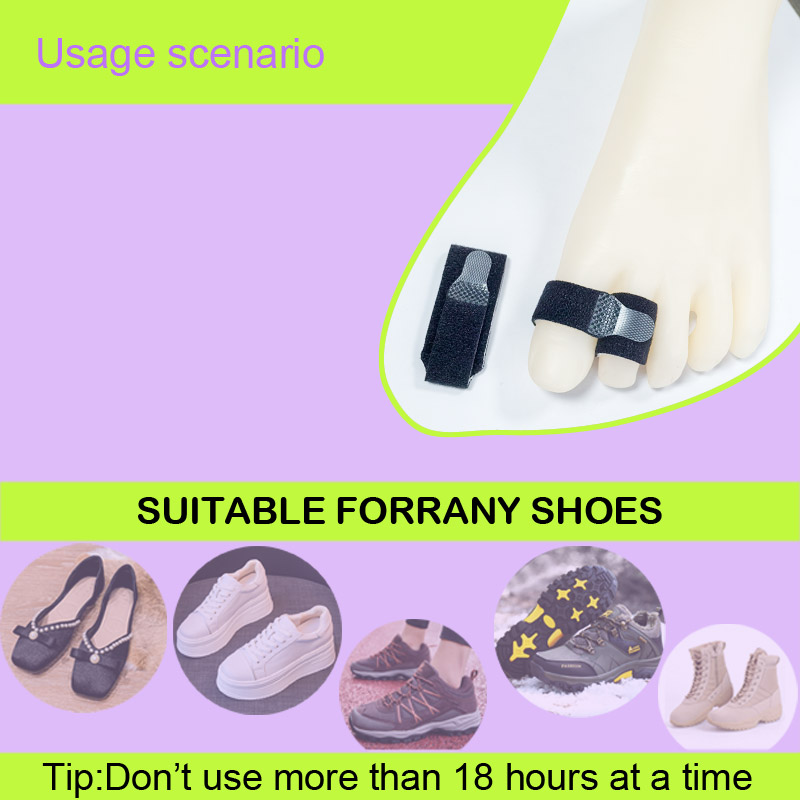
Execution requires precision and patience. Rushing the application process leads to immediate discomfort. Follow this clinical-grade protocol to ensure optimal results. It maximizes both therapeutic benefit and daily comfort.
Positioning the Gel: Evaluate the construction of the device. If you use a half-gel, half-fabric design, orientation matters. You must ensure the internal gel pad sits directly over the problem area. Center it precisely over the apex of the deformity. It should directly cover the primary friction point.
Tension Control: Gently unroll or stretch the material over the digit. Do not pull it aggressively. It must remain snug enough to stay static during walking. However, it must be loose enough to allow full capillary refill. Press the tip of the toe. The pink color should return in less than two seconds. If it takes longer, the tension is too tight. Remove it immediately.
Shoe Integration: The protocol does not end at the skin. You must test the device inside the patient's typical footwear. A correctly applied product should not increase the shoe's internal pressure. If the shoe feels overly tight, the intervention fails. We heavily recommend pairing these devices with wide toe-box footwear. This accommodates the extra volume comfortably.
Even a flawless application fails without proper aftercare. Practitioners often overlook this crucial education phase. You must equip end-users with maintenance knowledge. This significantly boosts long-term compliance.
The number one reason these devices fail involves improper maintenance. Users often wear them consecutively without cleaning them. This leads to sticky, unhygienic material. The silicone absorbs sweat and dead skin cells. It loses its elasticity. It eventually causes localized skin irritation. Educating the user changes this outcome completely.
Hygiene extends the lifespan of medical-grade polymers drastically. Instruct patients to hand wash the device daily. They should use lukewarm water. They must use a mild, unscented soap. Harsh detergents degrade the elastomer matrix. After washing, rinse it thoroughly. Let it air dry completely. Keep it away from direct heat sources like radiators. Excessive heat melts the mineral oil compounds.
Washed polymer often feels tacky once dry. This tackiness creates friction against hosiery. We introduce the "Talcum Rule" to solve this issue. Instruct users to lightly dust the clean, dry material. They can use standard talcum powder. Cornstarch works equally well. This simple step restores the original smooth glide. It prevents the silicone from catching on socks during wear.
You must establish realistic expectations regarding durability. These items are consumables. They endure thousands of repetitive stress cycles daily. Even high-quality materials degrade eventually. They typically last after four to six weeks of daily weight-bearing use. The polymer thins out over time. Once the cushioning bottoms out, users must replace it. Delaying replacement invites the original foot pain to return.
Quality control begins long before the product reaches the foot. Procurement decisions dictate clinical outcomes directly. Buyers face a complex landscape when sourcing inventory. You need strict criteria to navigate this market successfully.
The global market currently overflows with low-grade silicone options. These inferior products tear easily under minimal tension. They flatten out after a few hours of walking. Worse, many contain cheap industrial plasticizers. These chemicals often cause allergic contact dermatitis. Clinicians cannot risk patient safety on unverified materials. You must evaluate the base chemistry rigorously.
Always demand high-performance polymers. Look specifically for medical-grade Thermoplastic Elastomer (TPE). Pure mineral-oil-enriched silicone also serves as an excellent baseline. These specific compounds retain exceptional structural memory. They bounce back after compression. Furthermore, they slowly release skin-softening oils during wear. This dual-action provides mechanical cushioning and dermal hydration simultaneously.
Your supply chain partner matters immensely. Choosing a reliable premium foot care products supplier eliminates massive headaches. You should interrogate potential vendors using three critical pillars.
Scalability: Can the manufacturer maintain strict batch consistency? Small sample runs often look great. However, quality sometimes drops during massive production runs. Ensure they utilize automated, precision-molding equipment.
Compliance: Do they hold relevant certifications? They should possess ISO standards for manufacturing. They need FDA registrations if classified as medical devices. Documented compliance protects your liability.
Packaging Options: Consider your distribution model. Do they offer retail-ready packaging? Clear usage instructions on the box increase consumer success. Alternatively, do they only ship bulk clinical bags? Match their output to your operational needs.
Never commit to a large contract blindly. Request sample batches first. Subject these samples to rigorous stress testing. Perform a stretch-recovery test. Pull the material to twice its resting length. Release it abruptly. Measure how quickly it snaps back to its original diameter. High-quality whosale Toe Wraps recover instantly. Inferior plastics stretch out permanently. Only sign the procurement agreement after validating the physical stretch-recovery metrics.
Evaluation Metric | Low-Grade Supplier | Premium Supplier |
|---|---|---|
Material Base | Standard industrial silicone | Medical-grade TPE / Mineral oil |
Stretch Recovery | Poor (loses shape quickly) | Excellent (retains structural memory) |
Skin Safety | High risk of dermatitis | Hypoallergenic & soothing |
Compliance | Unverified or self-claimed | ISO / FDA registered facilities |
Effective use relies heavily on precise application techniques. It requires rigorous daily hygiene. It also depends entirely on high-quality base materials. We covered the diagnostic criteria necessary for safe deployment. We detailed the physical steps for proper positioning and tension control. You now understand how crucial cleaning and powdering are for longevity. Furthermore, you possess the evaluation framework needed to source superior inventory reliably.
We urge practitioners and buyers to take immediate action. Audit your current inventory today. Compare your existing usage instructions against this clinical protocol. Update your patient education handouts accordingly. Finally, contact your current vendors. Request their technical material specification sheets. Ensure you provide the highest standard of foot care possible.
A: No. Skin needs to breathe. We strongly recommend removing them at night. Continuous wear traps moisture and increases the risk of maceration or fungal infections. Only wear them constantly if specifically directed by a licensed podiatrist for post-surgical care.
A: Ensure proper sizing first. An oversized tube always slips. Keep the foot completely dry before application to maximize grip. Finally, wear a well-fitted sock over the device. The sock holds the polymer securely in place during vigorous daily activity.
A: Proceed with extreme caution. Patients with compromised circulation or peripheral neuropathy lack pain indicators. A tight device could cause severe ischemic damage silently. They should only use these products under strict medical advisement. Caregivers must check their feet frequently for any hidden pressure sores.


