
English 
T: +86-18251114333
E: kingleo_sz@126.com
E: kingleo_sz@126.com
3rd Floor, Building 2, No. 338 Jiangzhuang Road, Guoxiang Street, Wuzhong District, Suzhou City
Views: 0 Author: Site Editor Publish Time: 2026-06-30 Origin: Site


Managing foot pain, friction injuries, or post-surgical recovery requires precision. The specific material you place against your skin matters immensely. While manufacturers often market silicone and thermoplastic gel interchangeably, these materials perform very differently under friction, pressure, and heat. Choosing the wrong material easily leads to premature product degradation. You might experience severe discomfort inside your footwear or see poor patient compliance over time. Our goal here is clear. We provide an objective, evidence-based breakdown of silicone versus gel materials. This guide helps individuals and bulk purchasers evaluate the right Toe Wrap for specific clinical or athletic applications. Understanding the foundational chemistry and practical behaviors of these polymers ensures you select the perfect tool for foot health. Whether you buy one piece or source inventory, this knowledge protects your investment and your toes.
Silicone offers superior structural longevity and hygiene, making it ideal for high-impact activities and long-term reuse.
Thermoplastic elastomer (TPE) gels provide unmatched elasticity and often contain mineral oils for skin conditioning, suited for sensitive skin and rigid deformities.
Neither material corrects structural foot deformities (like bunions or hammertoes); their primary medical function is friction mitigation and pressure redistribution.
For clinics and retailers, partnering with a premium foot care products supplier ensures medical-grade material safety and consistent batch quality.
To make an informed choice, we must first separate marketing terms from material science. The foot care industry frequently blurs the lines between silicone and gel. However, their chemical makeup dictates how they behave under the heavy mechanical stress of walking and running.
Silicone is a synthetic polymer built on a backbone of silicon and oxygen. Podiatrists favor medical-grade silicone because it boasts exceptional thermal stability and high tensile strength. It maintains its exact shape under sustained mechanical stress. Furthermore, silicone has an incredibly low porosity. This means it repels water, sweat, and microscopic debris. When you need a structural barrier that will not compress flat after weeks of use, silicone serves as the clinical standard.
On the other end of the spectrum is thermoplastic elastomer (TPE) gel. TPE is a much softer, highly flexible blend of plastics and rubbers. Manufacturers frequently infuse TPE with medical-grade mineral oils, aloe vera, or vitamin E. Instead of acting like a rigid bumper, TPE gel behaves more like human adipose tissue (fat). It squishes, stretches, and disperses impact forces across a wider surface area. The oil infusion actively moisturizes the skin during use.
You will frequently see consumer products labeled as "gel-silicone." This label creates massive confusion. True evaluation requires separating the firm structural polymers (silicone) from the soft, oil-based elastomers (TPE). A true silicone product will feel smooth and firm. A TPE gel product will feel incredibly stretchy, soft, and slightly tacky to the touch. Knowing this baseline prevents costly procurement mistakes.
Material Characteristic | Medical-Grade Silicone | Polymer/TPE Gel |
|---|---|---|
Core Composition | Silicon-oxygen polymer | Plastic/rubber blend with mineral oils |
Structural Memory | High (Retains shape) | Low to Moderate (Compresses easily) |
Elasticity | Moderate | Extremely High |
Porosity | Non-porous (Hygienic) | Micro-porous (Traps some debris) |
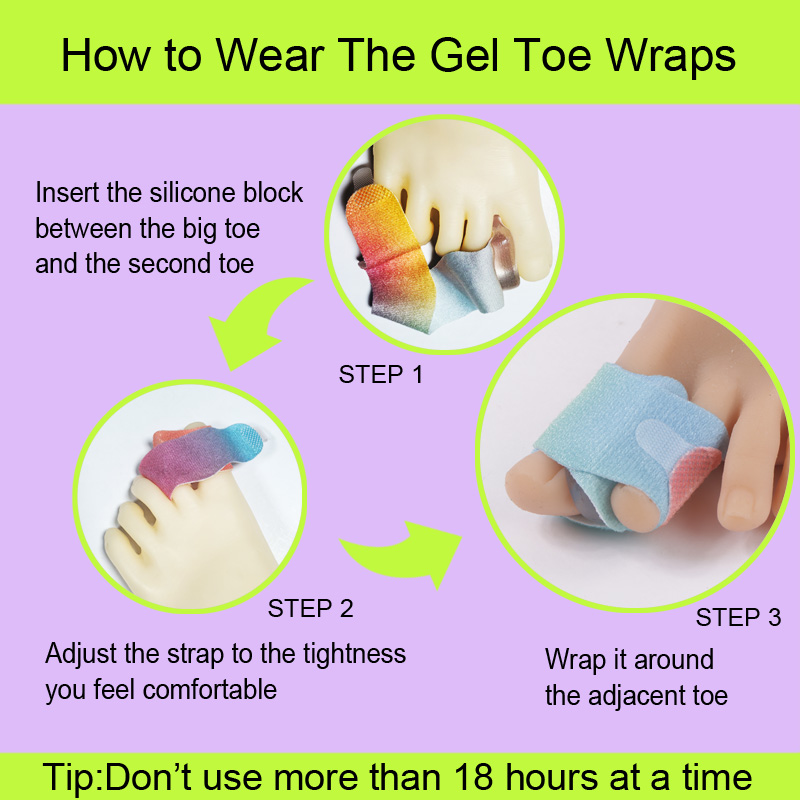
Silicone serves as the heavy-duty option in foot care. It provides specific biomechanical advantages, but it also demands proper footwear integration.
High Durability & ROI: Silicone resists tearing and compression flattening beautifully. You can use a silicone wrap daily for months without it losing its structural integrity. This provides an excellent return on investment for daily users.
Hygiene & Sterilization: Because the surface is non-porous, silicone strongly resists bacterial and fungal growth. You can easily wash it with hot water and antibacterial soap. It dries instantly, making it perfect for daily reuse.
Firm Structural Support: Silicone excels at maintaining physical space. If you need to prevent two toes from overlapping and rubbing against each other, silicone provides a firm wedge that will not collapse under shoe pressure.
Increased Bulk: The firmness of silicone means it takes up permanent space. It can easily alter the fit of standard toe-box shoes. If your shoes are already tight, adding silicone might cause secondary pressure points elsewhere on the foot.
Zero Moisture Wicking: Silicone does not breathe. It traps sweat directly against the skin. Users must apply talcum powder or wear moisture-wicking socks to prevent maceration (skin softening) during long athletic sessions.
Best Practice: Always size up your footwear by a half size or choose shoes with a "wide toe box" when implementing daily silicone structural supports.
TPE gel focuses heavily on sensory comfort, shock absorption, and skin protection. It offers immediate relief but requires more frequent replacement.
Superior Shock Absorption: TPE mimics the natural padding of your foot. It offers immediate, soothing pain relief for acute issues like corns, blisters, and neuromas. It absorbs downward pressure and diffuses it outward.
Skin Conditioning: The gradual release of medical-grade mineral oil actively softens hardened calluses. Over time, it reduces localized skin shear and promotes the healing of dry, cracked areas.
Hyper-Elasticity: Gel stretches easily over severely swollen or deformed joints. It does this without restricting blood circulation. This elasticity makes it incredibly forgiving to wear on arthritic toes.
Faster Degradation: Gel simply breaks down faster. It becomes sticky, thins out, or tears when exposed to high-friction environments. Marathon runners often destroy gel products in a single long run.
Debris Accumulation: The tacky surface easily attracts lint, pet hair, and dirt. It requires frequent washing and powdering. Ultimately, users must replace gel products much more frequently than silicone ones.
Common Mistake: Leaving gel protectors on 24/7 without washing them. The trapped oil and moisture can cause fungal infections if not properly cleaned and aired out daily.
Selecting the right material depends entirely on the activity, the environment, and the specific foot condition. Let us examine three common real-world scenarios.
Athletics and Running (High Impact): You should lean heavily toward silicone. Inside a running shoe, the foot undergoes massive, repetitive shear forces. The material must withstand this aggressive friction without tearing apart. Silicone holds its ground. It prevents blisters on long runs while remaining intact. Just ensure you manage sweat with appropriate athletic powder.
Diabetic Foot Care and Neuropathy (High Sensitivity): You should lean toward TPE gel. Patients with neuropathy cannot always feel pressure building up. The priority here is zero-compression cushioning. Gel provides gentle, hyper-elastic skin protection to prevent dangerous ulcerations. The mineral oils also help condition diabetic skin, which is often prone to extreme dryness.
Post-Surgical Recovery: Silicone is generally preferred for post-operative care. Doctors prioritize ease of sanitization above all else. Because silicone can be thoroughly washed and dried instantly, it reduces infection risks. It also holds the toes in strict alignment during bone healing. However, the patient's recovery footwear must accommodate the extra volume.
Purchasing foot care materials at scale introduces new complexities. Buyers must look beyond the basic material properties and evaluate the manufacturing standards of the supply chain.
Sourcing from a reliable premium foot care products supplier directly impacts medical safety. High-quality manufacturers provide verified hypoallergenic certifications. They also guarantee latex-free manufacturing facilities. This prevents catastrophic allergic reactions in patient populations. You must verify that the supplier uses medical-grade polymers rather than cheap industrial plastics disguised as foot care products.
Your material choice affects your inventory turnover. Silicone offers a much longer shelf life. It does not dry out or melt in uncontrolled warehouse temperatures. It also boasts a lower return rate for structural defects. Conversely, gel products drive a higher recurring purchase volume. Because gel breaks down faster and attracts debris, consumers must buy replacements frequently. Retailers should stock both, but plan for faster inventory turns on gel items.
When procuring whosale Toe Wraps for a clinic or retail line, evaluate upfront material costs against long-term patient compliance. Cheaper gels melt or tear quickly. This damages brand trust and frustrates patients. Medical-grade silicone costs slightly more upfront, but it guarantees user compliance because it actually survives daily wear. Choose suppliers who balance clinical efficacy with scalable pricing to protect your brand reputation.
Choosing between silicone and gel is not about finding the "best" overall material. It is about matching the polymer's physical properties to the user's specific biomechanical needs. You must prioritize structural durability or sensory cushioning based on the daily use case.
Primary Need | Recommended Material | Why It Works |
|---|---|---|
Firm Toe Separation | Silicone | Maintains rigid space between digits. |
High-Impact Sports | Silicone | Resists aggressive shear forces and tearing. |
Callus Softening | TPE Gel | Releases mineral oils into the skin. |
Severe Joint Deformity | TPE Gel | Stretches without cutting off circulation. |
Before purchasing any toe protection, measure your shoe's toe-box width. Ensure you have at least a half-inch of extra space to accommodate the wrap. For B2B buyers, we strongly recommend requesting material safety data sheets (MSDS) before committing to bulk orders. This confirms the exact chemical composition of your inventory.
A: No. They relieve painful symptoms and can slow the progression of deformities by reducing daily friction. However, no flexible material can reverse underlying bone deformities. Surgery remains the only structural cure for advanced bunions.
A: Wash both materials by hand using warm water and mild soap. Allow them to air dry completely. For gel wraps, you must apply a light dusting of talcum powder or cornstarch after drying to remove the sticky residue and prevent tearing.
A: Yes. Distance runners should prioritize silicone protectors because they withstand high friction better than gel. Always pair them with moisture-wicking socks to manage sweat, as these materials do not breathe and can cause skin softening.
A: High-quality medical silicone and TPE gels are inherently latex-free. However, cross-contamination can occur in cheap manufacturing facilities. Always verify latex-free certifications with your supplier to guarantee absolute medical safety for sensitive individuals.


